How to Use ChatGPT for Your School Email Marketing Campaigns Think again. It’s a game-changer for connecting with students and growing your school. But if you’re feeling lost about where to start, here’s some good news: ChatGPT is your easy-to-use, AI-powered sidekick. It’s like having a digital marketing expert in your corner, ready to help you create emails that truly resonate. Let’s get started and turn your email campaigns into a black belt success!
Why Martial Arts Schools Need Personalized Email Marketing
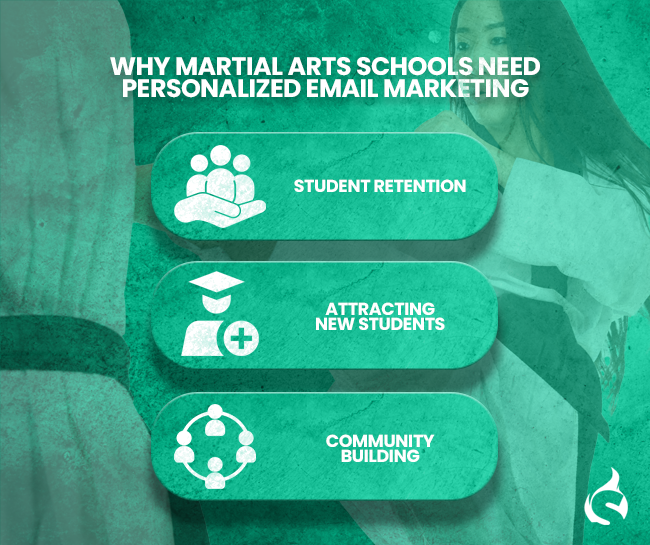
Personalization in email marketing is key for martial arts schools. It’s about making each student feel seen and valued, boosting retention, attracting new students, and building a strong, engaged community around your school.
- Student Retention: Personalized emails can significantly enhance student retention. By addressing students’ individual needs and progress, you create a sense of belonging and recognition.
- Attracting New Students: First impressions matter. Tailored email communications can captivate potential students, showcasing your school’s commitment to individual attention.
- Community Building: Email marketing isn’t just about promotion; it’s a tool for building a community. Personalized emails foster a sense of unity and shared passion among your students.
Tailoring Your Email Strategy with ChatGPT
Leverage ChatGPT to personalize your martial arts school’s email strategy. This AI tool helps craft messages that resonate with each student’s journey, enhancing engagement and fostering a deeper connection with your martial arts community.
Crafting Engaging Email Content
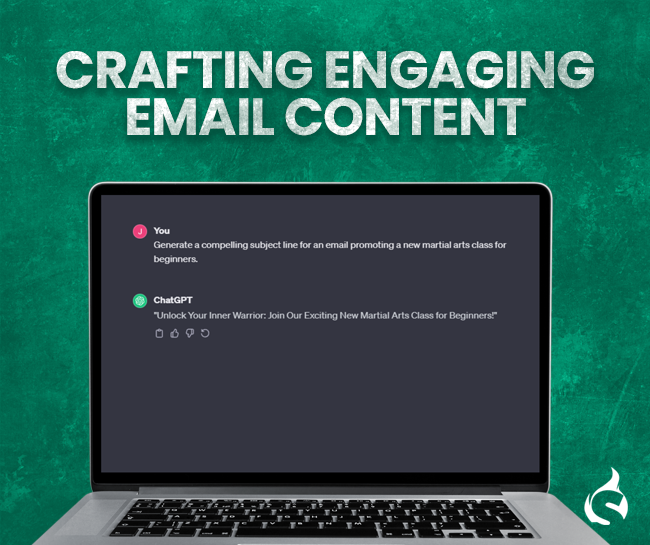
ChatGPT can revolutionize how you write emails for your martial arts school. It helps create captivating subject lines that boost open rates and composes body content that vividly showcases the benefits of martial arts training. The tool is adept at personalizing content for diverse audience segments, whether they’re beginners, advanced students, or parents.
Sample Prompt:
“Generate a compelling subject line for an email promoting a new martial arts class for beginners.”
Designing Impactful Email Templates
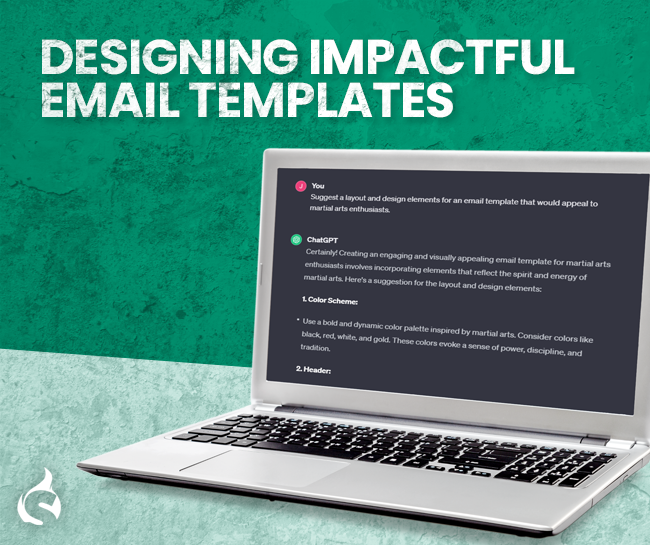
With ChatGPT, designing email templates that resonate with martial arts enthusiasts becomes effortless. It guides you in selecting layouts and design elements that speak to your audience, ensuring your emails are not only informative but also visually appealing.
Sample Prompt:
“Suggest a layout and design elements for an email template that would appeal to martial arts enthusiasts.”
Generating Creative Content Ideas
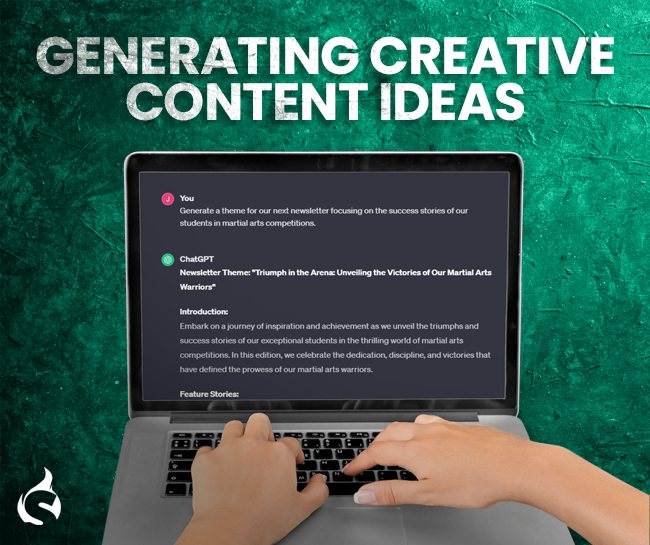
Struggling with content ideas for your newsletters? ChatGPT is your creative partner, suggesting themes like success stories or health benefits of martial arts. It can even help in conceptualizing recurring email series, such as ‘Technique of the Week’ or ‘Student Spotlights’.
Sample Prompt:
“Generate a theme for our next newsletter focusing on the success stories of our students in martial arts competitions.”
Implementing Segmentation Strategies
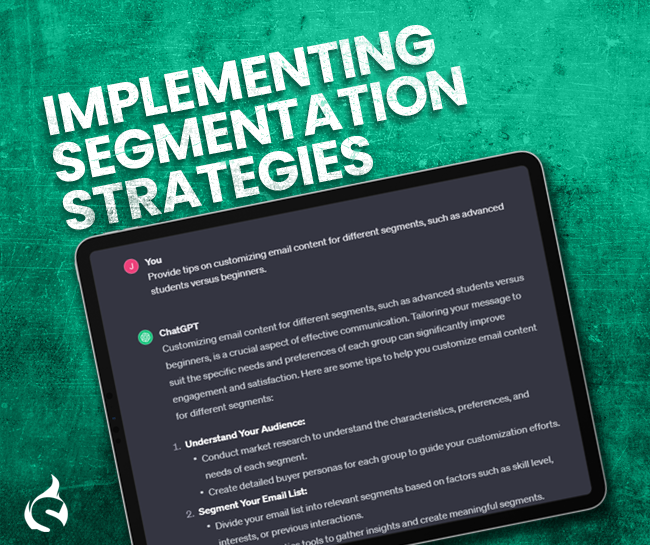
ChatGPT assists in segmenting your email list effectively, be it by skill level, age group, or interests. This segmentation allows for more tailored and relevant content for each group, enhancing engagement and connection with your audience.
Sample Prompt:
“Provide tips on customizing email content for different segments, such as advanced students versus beginners.”
Promoting Events and Workshops
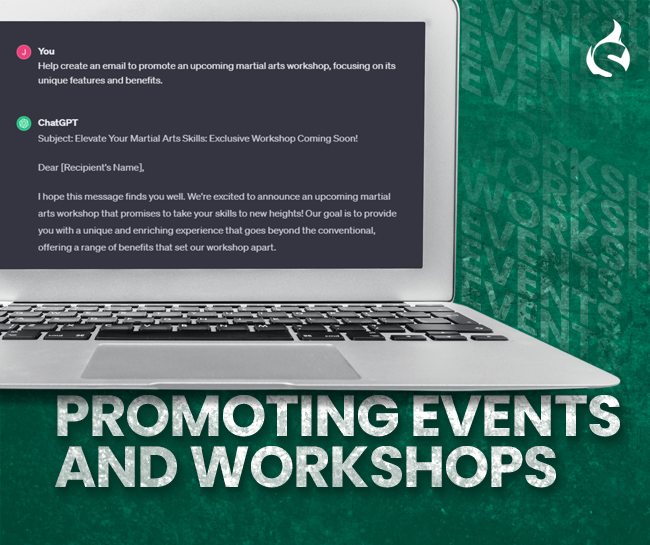
Planning special events or workshops? ChatGPT helps craft promotional emails that not only inform but also excite your audience, driving up attendance and participation.
Sample Prompt:
Help create an email to promote an upcoming martial arts workshop, focusing on its unique features and benefits.
Gathering Feedback through Emails
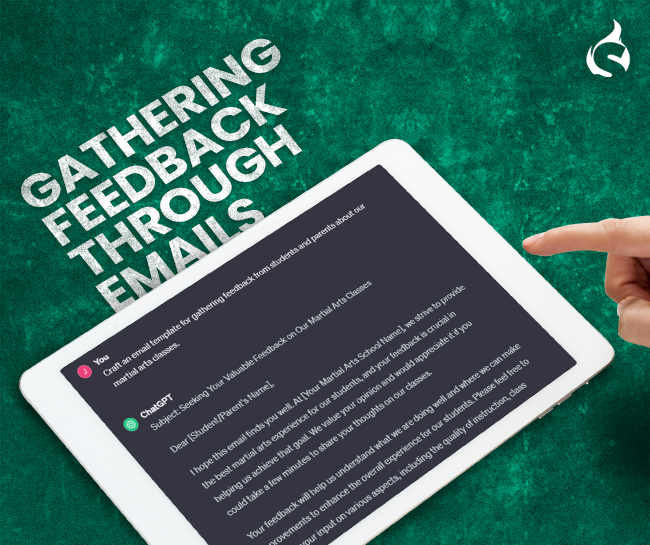
Finally, ChatGPT aids in creating emails for feedback and surveys. This is crucial for understanding and catering to the needs and preferences of your students and their families, ensuring your martial arts school continually evolves and improves.
Sample Prompt:
“Craft an email template for gathering feedback from students and parents about our martial arts classes.”
Use these prompts as a starting point with ChatGPT to craft tailored content for your martial arts school’s email campaigns. Remember, clearer instructions and detailed data yield better results, blending your insights with ChatGPT’s capabilities for enhanced campaign success.
Taking the Next Step with AI
Embracing AI in your martial arts school’s email marketing strategy is not just about staying current; it’s about being a leader in your community. ChatGPT offers an accessible, powerful tool to enhance your communication, deepen your student relationships, and grow your school.
And remember, for an all-in-one solution to manage your member-based business with ease, explore Spark Membership Software. It’s the ideal tool to streamline your operations, attract more members, and significantly grow your revenue. Embrace Spark Membership Software – the only software you’ll need for limitless business growth.