How Do I Handle Pricing Objections From Prospective Martial Arts Students

Let us be real. When a parent or potential student says, “It’s too expensive,” the words rarely stick to money alone. Often, the value has not landed yet. This guide speaks to school owners who want to go past surface-level objections, uncover what truly holds people back, respond with clarity, build trust, and enroll more students.

Understanding the Root of Pricing Objections

Martial arts instructor demonstrating techniques to a young student in a dojo, emphasizing personal growth

A pause over price usually signals that the value is not clear. The hesitation might come from uncertainty about commitment, a comparison to a local gym or free tutorial videos, or even a parent questioning whether their child will stick with it. The task is to close that gap so the benefits show up plainly.

Why Do Students Say No?

  • They do not see how the program stands apart from cheaper or free options.
  • They are unsure whether martial arts will fit into their schedule.
  • They are not convinced it is worth the time, effort, or money.
  • They want to enroll, yet struggle to justify the cost at home.
  • These are not dead ends. They are signposts that show exactly where trust needs building.

How to Discover the Real Objection

Most price pushback is not truly about dollars. The path to the truth is smart questions that invite honest answers. Yes or no will not do much work here.

Start with:

  • “What are you hoping martial arts will help you or your child with?”
  • “What is the biggest hesitation about starting right now?”
  • “If price was not the issue, would you feel ready to move forward?”

💡These questions separate real budget limits from doubts about value, timing, or decision confidence. Once the cause is clear, the response can be personal and helpful rather than pushy.

Shifting the Conversation to Value

If the pitch focuses on schedules and belt levels, price becomes the spotlight. People need to hear what their money buys in their lives. Martial arts is more than an hour on the timetable. It changes patterns, habits, and outcomes.

Show benefits that reach far beyond the mat:

  • Discipline and Focus: Training builds attention and follow-through that show up in school, work, and daily tasks.
  • Confidence and Resilience: Challenges in class forge a belief that carries into real-world problems.
  • Self-Defense: Families gain peace of mind knowing students can protect themselves if necessary.
  • Community and Belonging: Training partners become a tribe. That connection keeps students returning.

💡Link outcomes to what matters to the prospect. Use real stories and parent testimonials so the value feels concrete, not abstract.

Flexible Pricing Models That Help

Some families see the value and still wrestle with the budget. Flexibility does not lower worth. It signals empathy and makes enrollment accessible.

Smart Options That Support Your Families:

  • Tiered Memberships: Offer Basic, Unlimited, or Premium so families can choose what fits their needs.
  • Family Discounts: Make it easier for siblings or multiple family members to join without excessive strain.
  • Trial Classes or Short-Term Packages: Reduce the risk and let prospects test the waters.
  • Monthly or Weekly Payment Plans: Smaller installments ease pressure and keep momentum.

Willingness to work with families builds trust and often becomes the tipping point.

Handling “I Need to Think About It”

This line shows up often. Usually, it is not a firm no. It is the fear of choosing wrong. The goal is to make the next step feel smaller and safer.

Helpful moves include:

  • Friendly Urgency: Mention limited space or a deadline without heavy pressure.
  • Low-Risk Offers: Provide a week of training with no long-term commitment so the value can be felt first-hand.
  • Thoughtful Follow-Up: A quick personal message after the trial, asking how it went, shows care and keeps momentum alive.

Give space for decisions yet guide with clarity. Many prospects need one small nudge to say yes.

Train Staff to Respond Like Pros

Systems matter and people matter. Staff need skills to answer with clarity, warmth, and consistency. Done well, objections become openings.

Ways to build team consistency:

  • Script Cheat Sheets: Provide simple talking points for common objections.
  • Practice Makes Confident: Run regular role-plays to sharpen delivery.
  • Messaging Templates: Ready-to-send emails and texts that match the brand voice.
  • Weekly Staff Huddles: Review wins, troubleshoot challenges, and align the team.

When the whole staff leads with value, the school’s reputation and trust grow stronger.

Using Tech to Streamline Objection Handling

Manual follow-up takes time and introduces gaps. Missed calls, forgotten messages, and inconsistent timing can cost enrollments. SparkMembership helps keep outreach consistent and on time.

Technology makes this smoother:

  • Tag objections in real time so the real reason does not get lost.
  • Automate follow-up messages based on the objection to keep contact personal and prompt.
  • Track what works with built-in reports so the approach can keep improving.

💡 Instead of relying on memory, use a system that sends the right message at the right time so nothing slips through the cracks.

Handling pricing objections is not about winning an argument. It is about making the picture clear. Once families see how training changes lives, price stops looking like a wall and starts looking like a doorway.

Meet hesitation with empathy. Replace pressure with listening. Back up tuition with proof of impact. Do that consistently, and more students enroll and stay longer.

For school owners building steady growth, clarity beats pressure every time.

If you’re ready to make handling pricing objections simpler and close more enrollments, Spark Membership can help. It gives you all-in-one tools to manage your school, connect with families, and grow without the stress. Try Spark Membership and see the difference for yourself.

Why Schools Struggle With Member Retention

Why Schools Struggle With Member Retention

You’re putting in the hours. Your instructors show up, the mats are clean, and your classes are packed—at least for a while. Then, like clockwork, students start dropping off. No complaints, no drama… they just fade away.

Sound familiar?

You’re not the only one dealing with this. Member retention is one of the biggest pain points for martial arts schools—and if it’s not handled right, it quietly chips away at your revenue, your morale, and your long-term growth.

This article breaks down exactly why schools lose students, even when classes are solid, and what you can do to stop the churn. We’ll unpack the most common issues, from weak onboarding and unclear communication to missed opportunities in your follow-up systems. More importantly, we’ll show you real, proven strategies to build loyalty, boost engagement, and keep your students coming back.

Because growing your school isn’t just about bringing people in. It’s about making them want to stay.

Communication Breakdowns Impacting School Member Loyalty

a frustrated martial arts instructor stands in a dimly lit dojo, surrounded by scattered, neglected class schedule flyers, conveying the chaos and disconnect caused by ineffective communication with members.

You could have amazing classes and still lose students if your communication’s off. When people feel like they’re being left out of the loop, they start checking out. It doesn’t happen overnight—it’s slow. But once they feel disconnected, it’s hard to pull them back in.

Irregular or Unclear Updates Causing Confusion

Ever changed a class time and forgot to tell someone? Or posted about an event and assumed everyone saw it? Yeah, we’ve all been there. But when that happens too often, people start missing stuff, and they get frustrated.

Maybe they show up late. Maybe they miss a promotion or an event. And even though it’s small, it adds up. They start feeling like the school is disorganized. Like maybe it’s not worth their time.

Clear, regular updates fix that. Be direct. Repeat yourself if you have to. Send reminders through more than one channel. It might feel like overkill, but most people appreciate the clarity. It shows you respect their time.

Generic Messaging Failing to Resonate With Diverse Members

You’ve got kids. Teens. Parents. Hardcore athletes. People are just looking to stay active. And yet a lot of schools send the same email to all of them. No wonder it doesn’t land.

If a 12-year-old white belt and a 35-year-old black belt are getting the same updates, something’s off. Different groups care about different things. Speak to them directly.

Send fitness-related tips to adults. Promotion reminders to parents. Competition info for your serious students. Segmenting your messages makes people feel like you get them, and that’s what keeps them engaged.

Absence of Effective Two-Way Feedback Channels

If your students feel like their opinion doesn’t matter, don’t be surprised when they bounce. Most people won’t complain to your face—they’ll just leave.

So ask them. Regularly. Use surveys. Put up a feedback box. Shoot out a message asking how they’re liking things. And when they answer? Show them you’re listening.

If someone says classes feel rushed, try adjusting the pace. If a bunch of people ask for a new time slot, test it out. Even if you can’t do everything, just showing that you care goes a long way.

Overlooking Preferred Communication Methods of Members

This one’s simple. Not everyone checks their email. Some only read texts. Others live on Instagram or TikTok.

If you’re only sending updates one way, a bunch of people won’t see them. You’ve gotta meet people where they already are.

Email, texts, social posts, app notifications—use all of them. And don’t assume everyone checks everything. Repeating important messages across a few platforms might feel repetitive to you, but it’s how you make sure no one misses out.

Failure to Demonstrate Consistent Value to Members

a bustling martial arts school interior, showcasing engaged students practicing techniques while an instructor enthusiastically highlights the benefits of membership through vivid visuals on a digital display, creating an atmosphere of motivation and growth.

People stay when they feel like they’re getting something out of it. If your students aren’t seeing progress or feeling challenged, they’re going to drift away. And usually, they won’t tell you—they’ll just stop showing up.

Difficulty Articulating Unique School Benefits

What makes your school special? If you don’t know, your students probably don’t either.

Maybe you’ve got instructors with serious experience. Maybe you’ve built a warm, supportive culture that people can’t find elsewhere. Whatever your edge is, talk about it. Show it. Remind people why they chose you and why they should keep choosing you.

Post success stories. Share member wins. Use your website, socials, and even in-person convos to highlight what sets you apart. That constant reinforcement helps people remember why they started—and why they shouldn’t stop.

Programs or Offerings Becoming Outdated

If your classes haven’t changed in years, students will start tuning out. People like routine, but they also like feeling like they’re progressing.

Add new drills. Rotate instructors. Invite guest teachers. Run themed months or mini-courses. Keep the content fresh, and people will stay interested.

That doesn’t mean throwing everything out—it just means you’re showing that your program evolves. That you care enough to keep improving it.

Mismatch Between School Offerings and Member Expectations

Ever had someone come in wanting to get shredded, and instead they’re bowing in and doing forms for 30 minutes? That’s not on them. That’s a misaligned expectation.

Be super clear upfront about what your school offers. Let people know what kind of training they’ll get. What are classes like? How belt progress works. The more honest you are early on, the fewer surprises there’ll be down the road.

And don’t stop after the intro. Keep checking in. Ask how things are going. Make sure what they’re getting still matches what they want. That kind of alignment is what keeps people long-term.

Not Showcasing Member Successes or Outcomes

People want to feel like they’re winning. They want progress. And they want it to be noticed.

Celebrate belt tests. Shout out to someone who nailed their first form. Post pics of students crushing their fitness goals. It’s not just about boosting their confidence—it’s about reminding them (and everyone watching) that your school helps people grow.

💡 When students see their wins—or see other people winning—they stick around because they know they’re part of something that’s working.

Weak Community Engagement and Sense of Belonging

a vibrant martial arts classroom filled with engaged students practicing together, showcasing a rich tapestry of interaction and camaraderie against a backdrop of colorful wall banners and training mats, highlighting the importance of community and belonging.

A real sense of community is what makes a martial arts school work. When students feel like they’re just numbers or don’t really fit in, even the best classes won’t keep them coming back. Building community is about more than just showing up for lessons. It’s about creating something bigger — a shared identity, goals everyone cares about, and chances to hang out and connect. Without that, students might just see the school as a place to pay for lessons, not a place that changes their lives.

Insufficient Opportunities for Member Interaction

When students don’t have enough ways to connect with each other, it hurts their desire to stick around. Martial arts isn’t just a solo sport; it thrives on friendships and support. Running team-building activities, tournaments, or casual social events helps close the gap between formal training and real connections. Research shows that playing sports with others helps reduce stress, improve mental health, and makes people feel like they belong. That feeling keeps students happy and loyal, which is exactly what schools need to retain members.

💡 Creating chances for regular, meaningful interaction helps schools build a supportive, welcoming environment. This doesn’t just make classes better, it encourages people to stick with it long-term.

Lack of Shared Activities or Common Goals

It’s tough to build a tight community if members don’t have shared goals or group activities. Schools that focus on goals everyone can rally behind — like local tournaments or community workshops — create a sense of purpose that pulls people together. Setting up groups or committees led by members, focusing on things like technique, fitness, or social events, makes the school feel more like a team. These shared activities make training more fun and give students more reasons to stay involved.

Poor Integration of New Members Into the School Culture

New students who don’t feel welcomed or included usually don’t stay long. The way schools bring new members in should be friendly and clear. Mentoring programs, where experienced students help newcomers, introductory sessions about the school’s values, and social events just for new members all help newcomers feel at home. Creating small, friendly groups early on prevents new students from feeling like outsiders. When schools invest in good integration, dropouts early on go down, and loyalty goes up.

Cliques or Exclusivity Hindering Wider Connection

Sometimes, groups of existing members form tight circles that unintentionally shut out newer or quieter students. That kind of exclusivity makes the environment less inviting. Schools need to work hard to create a culture where everyone feels welcome. Making sure students can train with different partners, mixing skill levels in drills, and organizing social events with mixed groups helps break down those barriers. Leadership has to promote openness and diversity. Offering anonymous ways to give feedback helps catch problems early. When everyone feels valued, fewer students leave.

Ineffective Onboarding Experiences for Newcomers

a frustrated newcomer stands alone in a dimly lit martial arts studio, bewildered by unclear instructions and an empty reception area, highlighting the challenges of a poorly executed onboarding experience.

How new members are brought in can make or break whether they stay long term. The first experience often sets the tone for everything that follows. If signing up is confusing, orientation is unclear, or no one checks in later, new students are more likely to quit.

Confusing Initial Sign-Up or Orientation Processes

The first contact matters a lot. If the sign-up process is complicated or unclear, potential students might give up before they even start. An easy, straightforward registration system helps people understand what they’re signing up for — like fees and class times. Clear instructions, pictures or videos, and personal help during orientation make a big difference and help get students started on the right foot.

Failure to Set Clear Expectations for Participation

If schools don’t clearly explain what’s expected from members, new students might get confused about how hard training will be, what gear they need, or the rules to follow. When people aren’t sure what progress looks like or what’s expected, they can get frustrated and lose motivation. Orientation sessions where instructors explain the curriculum and training goals help students understand what’s ahead and stay committed.

Not Connecting New Members With Existing Ones Quickly

A lot of onboarding processes miss out on introducing new students to the community fast enough. Without friends or support, new members feel alone and may lose interest. Setting up a buddy system or pairing newcomers with more experienced students helps them feel part of the group right away. Hosting welcome events where new members meet teachers and peers also builds connection early on. That quick introduction makes the start better and helps create long-lasting bonds.

Lack of Follow-Up After Initial Joining Period

If schools don’t check in with new members after they join, problems can go unnoticed and cause students to quit. Good onboarding includes follow-ups — like automated emails or personal calls — to remind students of events and ask how training is going. Keeping in touch makes members feel valued and helps catch any early issues. It also gives instructors a chance to adjust training to fit each student, which lowers early dropout rates.

Ignoring or Mishandling Member Feedback and Concerns

an imposing, modern martial arts school office, starkly illuminated by overhead led lights, showcases a cluttered desk strewn with unaddressed feedback forms, conveying a profound sense of neglect towards member concerns.

Listening to member feedback is crucial for schools wanting to improve and keep students. But many schools don’t have good ways to gather or respond to feedback. When concerns get ignored, students feel unimportant and may stop caring.

No Simple System for Members to Voice Opinions

If it’s hard for students to share their opinions, many won’t bother. Digital tools built into membership software let members give feedback easily and even anonymously if they want. Surveys or suggestion boxes open up communication and help schools find patterns in what needs fixing.

Slow or Non-Existent Responses to Member Issues

When schools don’t respond quickly or at all to problems, it makes members frustrated. For example, if a student complains about scheduling or equipment and hears nothing back, their dissatisfaction grows fast. Quick replies and action show members their voices matter. Training staff to handle these situations with care is important. Using a system that tracks each complaint and promises a response builds trust.

Not Acting Upon Constructive Member Suggestions

Even when feedback is collected, not doing anything with it can hurt. If students never see changes after sharing ideas, they stop giving feedback. Schools should clearly show how they’ve improved things based on member input. For example, adding new classes, tweaking schedules, or upgrading gear in response to suggestions shows that members’ voices are heard. Sharing updates about these changes keeps satisfaction high and encourages ongoing feedback.

Appearing Indifferent to Member Dissatisfaction

When leadership seems like they don’t care, members drop out faster. If students feel ignored, whether because no one follows up or nothing changes, they lose their sense of belonging. Leaders must focus on clear communication that acknowledges concerns and shares progress. Staff training on good customer service helps make sure every interaction is kind and respectful. This approach, along with being open about retention efforts, can help bring people back and stop them from leaving.

Perceived High Costs or Financial Barriers

a focused office scene captures a diverse group of martial arts school administrators engaged in a heated discussion around a large table, with charts and financial documents spread out, highlighting the urgency of addressing perceived membership costs and improving transparency.

Money’s always one of the first things people think about when deciding whether to stick around. If someone’s shelling out cash and not feeling like they’re getting their money’s worth—whether it’s because the price seems high, the payments feel too strict, or they don’t really know where the money’s going—they’ll start thinking about quitting. This isn’t just about lowering the cost; it’s about showing them why the price actually makes sense.

Membership Fees Outweighing Perceived Benefits

Here’s the thing: people don’t mind paying, as long as they feel like what they’re getting is worth it. But when all they see is a big number and they’re not noticing progress, special perks, or anything that screams “value,” they’ll pull back. What helps is showing them exactly how their money is being put to use. That might mean highlighting stats—like members who attend advanced classes improve at twice the speed—or just offering more flexibility in what they’re paying for. Tiered memberships, limited-time offers, or even a loyalty reward system can go a long way.

Inflexible Payment Structures or Options

One of the fastest ways to lose a member? Make them feel stuck. Life throws curveballs, and not everyone can fit into the same neat little payment plan. When people can’t adjust how or when they pay, they feel boxed in—and that builds frustration fast. Instead, offering multiple ways to pay, setting up auto-reminders, and letting people tweak their plan when they need to gives them one less reason to walk. If your billing system isn’t built for that kind of flexibility, it’s time to upgrade it.

Lack of Transparency Regarding Fee Usage

Let’s be real: nobody likes feeling like their money’s just disappearing into a black hole. If members aren’t sure what their tuition is funding, it can lead to suspicion. On the other hand, being upfront builds trust. Maybe that means a breakdown of what percentage goes to equipment upgrades, staff, community events—whatever makes the picture clearer. A quick “here’s how your fees help the school grow” email or slide during orientation can make people feel like they’re investing in something bigger than just a weekly class.

Implementing Successful Membership Retention Strategies for Schools

a dynamic martial arts classroom scene showcases an engaged instructor demonstrating techniques to a diverse group of focused students, emphasizing the importance of community and commitment in a vibrant, energetic atmosphere.

Keeping students isn’t just about fixing things when they go wrong—it’s about building something they want to be part of. The best retention strategies aren’t reactive. They’re built in. They come from understanding your members, planning around their needs, and paying attention to what the numbers are telling you.

Developing a Proactive School Member Retention Plan

The first step? Find out why people are actually leaving. Not guessing—actually asking them. Run exit surveys, track how often folks are showing up, and look for patterns in who drops off and when. Once you know what’s really happening, you can start fixing it. Maybe beginners need more check-ins. Maybe advanced students want more challenges. Build your plan around those insights—and keep it flexible. What works today might need a tweak next month.

Segmenting the Member Base for Targeted Retention Efforts

Your students aren’t all the same. A 7-year-old white belt doesn’t need the same thing as a 35-year-old black belt. So why try to keep them both engaged with the same strategy? Break your students into smaller groups and think about what each one really needs. Newbies might need more encouragement. Advanced students might want competition prep or deeper technique breakdowns. When you speak their language, they stick around longer.

Regularly Tracking Retention Metrics and Analyzing Departures

Flying blind is dangerous. If you’re not tracking your numbers—attendance, renewals, who’s dropping and when—you’re basically guessing. Use that data to spot trouble early. If attendance dips, find out why. If long-timers are leaving, something’s off. Schools that stay on top of their numbers are the ones that last. It doesn’t need to be complicated—a simple dashboard can show you who’s active and who’s slipping away before it’s too late.

Assigning Responsibility for Retention Initiatives

You can have all the best plans in the world, but if no one owns them, nothing gets done. Someone on your team has to be in charge of making sure members are happy, engaged, and sticking around. Whether that’s a dedicated retention lead or just part of someone’s weekly role, they should be checking in on attendance, sending follow-ups, and responding to any red flags. When there’s a clear point person, things get handled faster, and members feel like someone actually cares.

Refining Communication Tactics to Keep School Members Engaged

a dynamic martial arts school environment showcasing an engaging instructor actively conversing with diverse students in an energetic training session, emphasizing the school's commitment to effective communication and member success.

People don’t stay where they feel ignored. Good communication builds community, trust, and loyalty. It’s not just about blasting out info—it’s about reaching people in a way that makes them feel connected and seen.

Establishing a Consistent and Valued Communication Calendar

Random updates here and there won’t cut it. You need a schedule that keeps people in the loop and looking forward to what’s next. A weekly or monthly email, text reminders before events, maybe even shoutouts in a Facebook group—pick your rhythm and stick with it. If you’ve got a school app, even better. Use it. Highlight wins, share tips, and celebrate birthdays. The goal is to make communication feel valuable, not just noise.

Personalizing Messages Based on Member Interests or Segments

Nobody wants to feel like just another number. Personal touches matter. That could be as simple as addressing people by name in messages or sending different updates to kids, parents, and adults. If someone’s into tournaments, let them know about upcoming competitions. If they’re focused on fitness, send them training tips. When the message fits the person, they’re more likely to care and stick around.

Utilizing Multiple Communication Platforms Effectively

Don’t rely on just one channel. People miss emails. They don’t check the app. They scroll past social media. So spread it out. Send a text for urgent stuff, post class highlights on Instagram, and use email for deeper updates. Repeating key info across platforms means people are more likely to catch it somewhere, and that keeps them engaged and in the know.

Encouraging Member-to-Member Communication

What really makes a school feel like home? The people. If members are chatting, laughing, and encouraging each other, they’re way more likely to stay. Create space for that—whether it’s a private group chat, a Facebook group, or just pushing people to talk before and after class. Peer connections turn casual students into loyal lifers.

Actively Showcasing School Value to Improve Member Retention

a vibrant martial arts dojo filled with focused students in dynamic training poses, showcasing their skill improvements and personal growth under the attentive guidance of a passionate instructor, illuminated by strategic lighting that emphasizes the energy and dedication of the environment.

People stick around when they see the value. Not just feel it. Not just hear about it. Actually see it—in themselves, in the community, in the perks that come with membership.

Regularly Sharing Positive Impacts and Achievements

Celebrate everything. Belt promotions, tournament wins, someone finally landing that tricky kick—they all count. Share these stories in newsletters, on your walls, and in social posts. Highlight how training is changing lives. Those stories remind people that what they’re doing matters—and show others what’s possible if they keep at it.

Offering Exclusive Content or Access for Members

Want to keep people excited? Give them something special. Maybe it’s a members-only seminar, a bonus video series, or early access to events. These little extras make members feel like they’re part of something exclusive. And when people feel like they’re getting VIP treatment, they’re way less likely to walk away.

Continuously Adapting Programs to Meet Member Needs

Stale programs kill motivation. If classes always look the same and the curriculum never evolves, people get bored. Stay tuned in to what members are asking for. Try new formats, introduce different challenges, and adjust based on feedback. Keeping things fresh shows that you’re not just coasting—you’re growing, and they’re growing with you.

Highlighting Testimonials and Positive Experiences

When someone hears a story that hits close to home—like a mom saying her shy kid found confidence, or a guy who finally dropped weight thanks to training—it sticks. Collect those stories. Share them often. They do more than market your school—they make people feel connected. Like they’re part of a place where real change happens.

Building a Stronger, More Inclusive School Community

a dynamic martial arts classroom filled with diverse students of all ages and backgrounds engaged in training, showcasing camaraderie and a spirit of inclusivity under bright, focused artificial lighting.

Retention isn’t just about what happens on the mats. It’s about building a space where people feel seen, valued, and part of something bigger. That’s the real glue.

Organizing Regular Social Events and Networking Opportunities

People show up for training, but they stay for the community. Hosting things like game nights, BBQs, or group outings gives people a chance to connect off the mats. Those bonds make the school feel like family. And when students feel like they belong, they don’t leave.

Facilitating Special Interest Groups or Committees

Some folks want to go deeper. Maybe it’s a group for parents, a sparring club, or a team that helps run events. Giving people a role, a voice, or just a place to nerd out over what they love makes them feel more invested. And the more invested they are, the longer they stick around.

Implementing Mentorship or Welcome Programs

First impressions matter. If a new member walks in and feels lost or invisible, they probably won’t stay long. Pairing them with a mentor—someone who’s been around, who knows the ropes—makes the transition smoother. It also gives your veterans a sense of purpose. Everyone wins.

Recognizing and Celebrating Member Contributions

If someone’s showing up early to help out, volunteering at events, or going the extra mile—shine a light on it. Recognition doesn’t have to be flashy. A thank-you post, a certificate, or a shoutout in class makes people feel appreciated. When folks feel seen, they stay.

Martial arts school owners face numerous challenges in retaining members, ranging from communication gaps to financial concerns. However, by focusing on clear communication, personalized onboarding, and community development, these institutions can create a more engaging and valuable experience. Proactive retention strategies not only enhance member satisfaction but also lead to measurable increases in ROI and revenue. Implementing these insights will help build a stronger, more inclusive community where every member feels valued and motivated to continue their journey.

Want to strengthen your community, simplify operations, and boost retention across the board? Spark Membership makes it easy to manage every aspect of your school in one place. Take the next step toward building a more connected, efficient, and successful program with the support of a system built for schools like yours.

Martial Arts Attendance Software vs Traditional Methods: Is It Time to Switch?

Martial Arts Attendance Software vs Traditional Methods Is It Time to Switch

Are you still using paper sign‑in sheets or spreadsheets to track who shows up at your dojo? Many schools do, but they often deal with errors and wasted hours. In this article, we’ll show you how attendance software compares to those older methods, focusing on accuracy, speed, and what your data can reveal. By the end, you’ll see how switching to digital can solve clunky tracking, save you time, and help your school grow.

Defining Traditional Attendance Tracking in Martial Arts Schools

a cluttered martial arts school office featuring a worn wooden desk piled with sign-in sheets, punch cards, and clipboards, illuminated by harsh fluorescent lights, emphasizing the chaotic nature of traditional attendance tracking methods.

In many dojos, “traditional” means clipboards at the front desk, punch cards, or binders of sign‑in sheets. It’s straightforward, no tech required, but it eats up staff time, fills up storage with paper, and risks lost records. Once you’ve lost a log or sorted through crumpled pages, you’ll be eager to explore digital solutions that connect with your email marketing and point‑of‑sale tools.

Common Manual Methods Used Sign in Sheets Clipboards Punch Cards

Most schools use one or more of these tools — a sign‑in sheet on a table, clipboards passed around, or punch cards stamped for each class. They’re inexpensive to start, but someone still has to enter all that data, file it, or search through it when someone asks about credits. That extra work and the possibility of missing sheets soon make you wish for something smoother.

Strengths of Paper-Based Attendance Systems

The paper has a tactile feel. A quick glance, a friendly stamp, and that personal touch build rapport. For smaller schools without much tech know‑how, sticking to paper feels comfortable. Handwritten check‑ins let instructors connect face‑to‑face, boosting motivation and making students feel noticed.

Typical Drawbacks of Manual Record Keeping

However, paper records come with downsides. Sheets get lost, ink smudges, and details vanish. When attendance is scattered across clipboards or cards, finding past data, like total classes attended, turns into a scavenger hunt. This inefficiency seeps into your billing and marketing, making growth feel tougher than it should be.

Staff Time Required for Traditional Tracking

Every moment an instructor spends filling out sheets is a moment lost on the mat. Manually checking students in, hunting down pages, and transferring data to a computer cuts into teaching time. If you’ve ever wished for more hands‑on training and less desk work, digital check‑ins will feel like a breath of fresh air.

Storage and Organization Challenges With Physical Records

Paper stacks need cabinets, folders need labels, and both can vanish when you actually need them. Digging through binders for last month’s report isn’t just slow—it’s stressful. In contrast, a digital database keeps everything in one searchable spot, ready whenever you need it, no heavy lifting required.

Understanding Martial Arts Attendance Tracking Software Functionality

a sleek, modern martial arts studio featuring an automated check-in kiosk and digital screens displaying real-time attendance statistics, highlighting the seamless integration of technology in class management and participant engagement.

Automated check‑ins via kiosks, mobile apps, or barcode scanners change the game. You get real‑time visibility and a central hub for all attendance records. Systems like Xplor Recreation or Kicksite integrate scheduling, tracking, and analytics so you can focus on your students instead of spreadsheets.

Automated Check-in Options Kiosks, Mobile Apps, Barcode Scanners

Instead of juggling clipboards, imagine students tapping their app or scanning a code. That quick scan records attendance instantly and cuts down lines at the door. When check‑in is smooth, students arrive on time and staff can stay engaged in class preparation rather than admin tasks.

Real Time Attendance Monitoring Features

With real‑time updates, you see exactly who’s on the mat at any moment. Need to adjust drills because your class is smaller today? You can do that instantly. Since all data feeds into a dashboard, you can spot attendance peaks or dips as they happen.

Centralized Digital Record Management

All records in one place means no more rifling through papers. You can pull up a student’s attendance history in seconds, which helps you plan classes and outreach. Schools often boost retention simply by noticing who’s skipping sessions and reaching out.

How Software Simplifies Class Scheduling and Attendance

Automated scheduling lets you set up recurring classes, tweak times, or add new sessions in minutes without rewriting paper timetables. Students see the updated schedule on their phones, which cuts down mix‑ups and no‑shows. When logistics run themselves, you get back hours to refine your curriculum.

Integration Capabilities With Other Dojo Management Tools

When attendance software syncs with your billing, email, and scheduling systems, everything flows together. You can auto‑charge for missed classes, send targeted reminders, and generate marketing lists without retyping data. The fewer silos you have, the smoother your operations.

Accuracy and Reliability Head-to-Head Comparison

a modern office conference room showcases a high-tech attendance software interface displayed on a sleek screen, illuminating a diverse team engaged in a focused discussion, symbolizing the shift from error-prone manual logging to accurate data management in education.

Digital tracking slashes errors you get with handwriting mistakes or lost cards. Attendance software logs each tap or scan, creates audit trails, and stores past data so you can verify records instantly. No more “I thought I signed in” excuses.

Reducing Human Error With Attendance Software

With an app handling the logging, you eliminate most typos and misfiled cards. Every check‑in is timestamped and saved, so I always know who showed up. That peace of mind lets me focus on teaching rather than double‑checking logs.

Consistency Challenges in Manual Attendance Logging

Manual logs depend on each instructor’s habits—some fill out sheets right away, others wait until day’s end. That inconsistency leads to gaps and makes trend‑spotting impossible. Digital systems enforce a single process, giving you reliable data every time.

Data Integrity Software Versus Paper Trails

Paper fades, tears, or gets lost; digital records stay intact. Software validates entries as they come in, preventing blank fields or duplicates. When you need accurate data to decide which class times to add, you can’t beat that reliability.

Verifying Attendance Records: Differences in Approach

Flipping through binders to confirm attendance takes ages. With software, I filter by date or class type and find what I need in seconds. Quick verification helps with billing disputes, belt promotions, or parent inquiries.

Audit Trails and Historical Data Access

Digital attendance creates a full log—who checked in, when, and where. You can compare month‑to‑month attendance, track seasonal dips, or view a student’s year‑long progress. This transparency boosts accountability and guides your future planning.

Efficiency Gains Using Martial Arts Attendance Software

a modern martial arts studio with instructors efficiently utilizing attendance software on sleek tablets, surrounded by a busy class of students seamlessly checking in at a digital kiosk, all under bright, focused lighting that emphasizes the streamlined operational flow.

Going digital cuts paperwork, supply costs, and staff hours spent on admin. From faster check‑ins to automatic promotion reports, every feature adds up to more time on the mat and less time buried in files.

Time Savings for Instructors and Administrative Staff

Automated logging frees instructors from desk duty. Instead of noting down names, they dive straight into warm‑ups. Admin staff swap manual tallying for batch reports, giving them bandwidth for marketing or student outreach.

Streamlining the Student Check-in Process

With a quick scan or tap, students breeze through check‑in. That ease not only speeds up entry but also sets a positive tone for class. When waiting lines disappear, both students and instructors show up happier.

Automating Attendance Reporting for Belt Promotions

Tracking attendance for belt tests becomes effortless. The software flags when a student hits the required classes, so I don’t have to count sessions by hand. That accuracy makes promotions fair and saves hours of admin work.

Resource Allocation Paper and Supplies vs Software Subscription

Paper, ink, folders, storage—those costs add up over time. A software subscription shifts funds into tools that pay back in efficiency. Once you factor in saved staff hours and supplies, the ROI usually hits in just a few months.

Impact on Overall School Operational Flow

Digital attendance transforms your workflow. With fewer manual tasks, staff energy goes into teaching and student interactions. That shift lifts morale, strengthens community, and makes your dojo more welcoming.

💡 Investing in software replaces ongoing supply bills with a single subscription that pays for itself in saved time.

Reporting and Analytics: Traditional Logs vs Software Insights

a sleek, modern office workspace showcases two contrasting digital displays, one illustrating basic manual attendance logs and the other displaying vibrant, detailed analytics from advanced tracking software, emphasizing the evolution of data utilization in enhancing school operations.

Basic headcounts from paper can’t reveal trends or at‑risk students. Software digs deeper, showing which classes thrive, which days lag, and which students need a check‑in. These insights help you plan better and keep your community engaged.

Basic Headcounts From Manual Logs

A hand‑tallied list shows how many people came last Tuesday, but nothing about who misses classes or peaks in attendance. That shallow data limits your ability to adapt and grow.

Advanced Reporting Available Through Tracking Software

Software turns raw check‑ins into heat maps, retention curves, and star‑student lists. I know which class times draw crowds and which students might need a nudge. Those insights empower smarter schedules and targeted outreach.

Identifying Attendance Trends and Patterns Digitally

Tracking attendance over weeks and months helps you spot trends—summer dips, weekend peaks—and adjust your offerings. These data‑driven decisions optimize resources and keep students motivated.

Using Attendance Data for Student Retention Strategies

When data shows a student missing several sessions, I send a quick message to check in. That personal outreach, powered by software alerts, makes students feel valued and lowers drop‑out rates.

Generating Reports for Instructors, Parents, and Management

With a few clicks, I send custom attendance summaries to instructors, parents, or owners—no more photocopying or manual edits. Clear reports build trust and keep everyone aligned on student progress.

💡 Swapping handwritten logs for real-time dashboards turns raw data into clear action steps—so you can spot trends and fix issues before they snowball.

Making an Informed Choice for Your Martial Arts School

a sleek, modern martial arts dojo features a digital attendance display and training staff engaged in discussion, emphasizing the transition to advanced attendance software versus traditional methods in a vibrant, action-oriented atmosphere.

Before you choose between paper and software, assess your dojo’s unique needs: student count, class frequency, and your team’s tech comfort. Below, we’ll weigh costs against benefits, cover key factors for making the switch, and suggest when sticking to paper still makes sense.

Assessing Your School’s Specific Attendance Needs

Ask yourself how many students you handle weekly and how complex your schedule is. If you juggle dozens of sessions, automated check‑ins and reporting can save hours. Smaller dojos with a handful of classes may find paper sufficient for now.

Cost-Benefit Analysis Software vs Manual Methods

Software has a subscription fee, but consider the time you’ll get back and the supplies you’ll ditch. When you include saved admin hours, fewer errors, and better retention, digital solutions often pay for themselves quickly.

Factors Influencing the Switch to Attendance Software

Big rosters, intricate schedules, or growth goals often drive schools toward software. Also, look at your team’s willingness to learn and the vendor’s support quality—both crucial for a smooth rollout.

Training Staff on New Attendance Systems

Rolling out software means hands‑on training. Host demos, create quick‑start guides, and offer ongoing support. When instructors feel confident, adoption happens faster and data accuracy improves.

When Traditional Attendance Methods Might Still Be Suitable

If you run a tight‑knit dojo with only a few weekly classes and value face‑to‑face check‑ins, sign‑in sheets can work. In remote areas or spots with unreliable internet, paper remains a stable option until connectivity improves.

Transitioning from traditional attendance tracking methods to martial arts attendance software can greatly improve efficiency. This change cuts admin time, boosts tracking accuracy, and delivers insights that strengthen student engagement. By investing in digital tools, you’ll streamline your operations and create a more motivating training environment for both staff and students.

Ready to leave outdated logs behind and see your dojo thrive? Embrace the flow of real-time insights, effortless check-ins, and automated reports with Spark Membership Software. Start your free trial today and watch your school’s energy shift from paperwork to powerful training—because when admin is seamless, every student shows up ready to excel.

Knowing When to Upgrade Your Gym’s Equipment

Knowing When to Upgrade Your Gym's Equipment

In the dynamic world of fitness, your gym’s equipment is the heartbeat of your business. Understanding when to invest in new fitness equipment is crucial for maintaining your gym’s appeal and operational excellence. Let’s explore the key moments that signal it’s time for an upgrade.

  1. Frequent Breakdowns

Frequent Breakdowns

When your gym’s equipment breaks down more often than it operates smoothly, it’s a clear signal to invest in new machines. Consistent malfunctions not only disrupt workouts but also inflate your maintenance costs. Upgrading to reliable, modern equipment is a smart move for your gym’s financial health and member satisfaction.

💡Regular maintenance can greatly improve your gym experience. Well-maintained equipment operates more smoothly, lasts longer, and is safer to use. 

Essential Gym Equipment Maintenance

  1. If it’s too Outdated

If it's too Outdated

The fitness world is rapidly embracing technology, and your gym should too. If your equipment lacks the latest tech features like interactive displays and app connectivity, it’s time to modernize. Upgrading to tech-enhanced equipment can attract a tech-savvy clientele and provide a more engaging workout experience.

  1. Listen to Your Members

 Listen to Your Members

Listening to your members is vital. If they express dissatisfaction with outdated or uncomfortable equipment, take it seriously. Upgrading in response to member feedback demonstrates your commitment to their fitness experience, boosting loyalty and satisfaction.

💡 This proactive approach not only enhances the overall workout experience but also helps in maintaining a competitive edge in the fitness industry.

  1. Beat the Competition

Beat the Competition

To keep your gym competitive, you need to stay updated with the latest equipment. If neighboring gyms are offering newer, more advanced machines, it’s a sign to revamp your own equipment. This investment can help retain existing members and attract new ones, keeping your gym at the forefront of the fitness industry.

  1. For Clients Safety

For Clients Safety

Older equipment can pose safety risks. Investing in new machines with the latest safety features is crucial for protecting your members. This commitment to safety is essential for maintaining trust and a professional reputation.

💡 Up-to-date gym equipment minimizes the risk of accidents and injuries, providing a secure workout environment.

Investing in new fitness equipment is a strategic decision that impacts every aspect of your gym business. It’s about enhancing member experience, ensuring safety, and staying competitive. Keep an eye on these key indicators and be ready to invest in your gym’s future, ensuring it remains a top choice for fitness enthusiasts.

Tired of juggling multiple software and tabs to run your business? Streamline with Spark Membership Software. Manage your entire studio in one place, save time, and get a clear daily overview. Choose efficiency with Spark – the smarter way to operate.

Future-Proofing Your Gym: Strategies for Success

Future-Proofing Your Gym

In a world where technology and lifestyle changes occur rapidly, fitness facilities must evolve to stay relevant. This comprehensive guide provides actionable strategies to future-proof your gym, ensuring it remains a leader in the ever-evolving fitness industry.

Embracing Flexibility

Embracing Flexibility

Gone are the days when gym-goers were content with one-size-fits-all membership plans. In today’s fast-paced world, flexibility is key. The pay-per-visit model offers a solution that resonates with modern consumers’ lifestyles. This model is ideal for those with fluctuating schedules, including business travelers and individuals hesitant to commit to long-term contracts. By adopting this approach, your gym caters to a broader demographic, enhancing revenue potential and customer satisfaction.

💡 Embracing flexibility helps a gym stay current, versatile, efficient, cost-effective, and resilient, which are key elements for long-term success in the ever-changing fitness industry.

Personalized Fitness Experiences

Personalized Fitness Experiences

In the fitness world, personalization is crucial. Every individual has unique fitness goals and challenges, making tailored solutions more effective and appealing. Implementing a system that leverages data from wearable technology allows for customized workout plans. This not only improves client results but also enhances their engagement with your facility. Investing in smart equipment that syncs with users’ devices can provide real-time feedback and adjustments, making each workout session more efficient and enjoyable.

💡 Personalized fitness experiences help keep your gym relevant and competitive by meeting individual client needs, leading to better satisfaction and results.

Technology Integration in Fitness Facilities: A Strategic Approach

In today’s rapidly evolving digital world, fitness facilities face the challenge of choosing technologies that offer lasting value. While the pace of technological change can be daunting, with new trends emerging and fading quickly, it’s crucial for fitness facility owners to strategically embrace technology that enhances both operational efficiency and member experience.

Essential Technological Integrations

Essential Technological Integrations
  • App Integration: Integrating fitness apps with your facility’s offerings can create a seamless and personalized member experience, fostering greater engagement.
  • Keyless Entry Systems: These systems not only provide convenience and enhanced security but also valuable insights into facility usage patterns.
  • Seamless Transactions: Implementing digital payment and booking systems ensures a hassle-free and efficient customer experience, aligning with modern expectations.
  • Management Software: Sophisticated management software streamlines operations, from staff scheduling to financial management, aiding in better decision-making and service customization.

💡 By focusing on these key technologies, fitness facilities can confidently navigate the fast-paced digital landscape, ensuring they remain relevant and competitive in the fitness industry.

Building a Community: More Than Just a Gym

Building a Community

Fostering a sense of community within your fitness facility can be a game-changer. Hosting events, challenges, and group classes not only brings members together but also creates a supportive and motivating environment. Utilizing social media and your app to share success stories, health tips, and event updates can further strengthen this community bond. A gym that feels like a community encourages long-term membership and word-of-mouth referrals.

By embracing these innovative strategies, your fitness facility can stay ahead in a competitive market. The combination of flexibility, personalization, technological integration, community building, and sustainability forms a robust foundation for a gym that is not just a fitness center but a holistic health hub. Adapting to the evolving demands of the fitness industry is crucial, and these steps provide a blueprint for a gym that is not only modern and successful but also prepared for the future.

Manage your gym effortlessly and affordably with Spark Membership Software. Only $1 for a comprehensive tool that simplifies billing and memberships. Perfect for small gyms aiming to thrive.

Key Indicators That You’re Running A Successful Martial Arts School

Key Indicators That You're Running A Successful Martial Arts School

When it comes to establishing a martial arts school that excels, certain characteristics stand out. Here’s a closer look at the six hallmarks of a school that’s not just making waves but also sustaining success.

Comprehensive Planning for Your Business

Comprehensive Planning  for Your Business

A well-designed business plan is the foundation of a prosperous martial arts school. It acts as a roadmap, outlining the direction your school will take from its inception to its desired future state. A comprehensive plan takes into account the assets you start with and the goals you wish to achieve, such as expanding your student base or enhancing your facilities.

A strong marketing strategy complements the business plan by:

  • Targeted Promotion: Identify and connect with the specific group of people most likely to enroll in your classes.
  • Engagement & Retention: Find effective ways to keep students interested and committed to their martial arts journey at your school.
  • Regular Review: Make it a habit to revisit and refine your marketing efforts to ensure they’re as effective as possible.

Remember, these plans are living documents that should grow and change as your school does. They’re not just one-time requirements but ongoing tools for success.

💡 Comprehensive planning is crucial for your martial arts school because it ensures you have a well-defined path to success, the ability to adapt to changes, and a clear understanding of your goals.

Sustainable Growth Trajectories

Sustainable Growth Trajectories

A successful school sees its student numbers increase steadily. This means that more new students are joining than those who are leaving. Schools can achieve this by making their classes appealing and retaining students through engaging programs. While not every owner dreams of opening multiple locations, the goal is to have a full roster of students and provide them with quality training, whether that’s in one location or more.

A Reputation Built on Quality

A Reputation Built on Quality

The reputation of your martial arts school is crucial. It’s not just about marketing; it’s about the actual quality of the classes and the integrity of the business operations. Positive word-of-mouth is powerful and is built by providing excellent instruction and a welcoming environment for students.

💡 A reputation built on quality not only elevates your martial arts school but also enriches the lives of those who walk through its doors.

Staying True to Martial Arts Traditions

Staying True to Martial Arts Traditions

Martial arts are steeped in history and philosophy, and a school that respects these traditions will stand out. Teaching with authenticity and respect for the martial art’s heritage can instill discipline and respect in students, enhancing the school’s image and attracting students who value tradition.

Utilizing Effective Management Tools

Utilizing Effective Management Tools

The success of a martial arts school can often hinge on the efficiency of its day-to-day operations. Utilizing the right management tools can make a significant difference. Here’s a breakdown of how these tools can impact various aspects of your school:

  • Student Management: Software that tracks student progress, from attendance to belt advancement, ensures that students are recognized for their achievements and stay motivated.
  • Billing Systems: Automated billing systems streamline the payment process, reducing errors and saving time for both staff and students.
  • Communication Platforms: Tools that facilitate communication, like integrated messaging systems, keep the school community informed and engaged.
  • Event Scheduling: Calendars and scheduling tools help manage classes, events, and special seminars, making it easier for students to stay involved.
  • Reporting and Analytics: Understanding the trends within your school through data analysis can help in making informed decisions about growth and development strategies.
  • Marketing Automation: Automating aspects of your marketing can lead to consistent student recruitment and retention while ensuring your school’s visibility in the community.

By implementing these tools, a martial arts school can reduce the time spent on administrative tasks, allowing instructors to focus on what they do best—teaching martial arts. This not only improves the quality of instruction but also enhances the overall experience for students, which can lead to increased satisfaction and retention rates.

The journey to a distinguished martial arts school is charted through deliberate planning, embracing the digital age, and maintaining the art’s esteemed traditions. It’s about creating a space where students don’t just learn martial arts; they become part of a legacy. The right tools and strategies are the brush and canvas for painting a school’s future—one where every kick, punch, and block is part of a bigger picture of enduring success.

For further guidance on enhancing the success of your martial arts school, make sure to check out our blog post titled “Martial Arts Advertising Ideas.” Explore creative approaches to promote your school and draw in new students.

If you’re in search of efficient management tools for your martial arts school, your search ends here! Experience the capabilities of Spark Membership Software, the top choice for martial arts schools. Simplify your operations, connect with your students, and elevate your school’s achievements. Don’t let this opportunity pass you by – unlock your school’s full potential with Spark today!
How to Get New Gym Members: Strategies for Fitness Business Growth

How to Get New Gym Members

Running a gym is about more than just offering a space to work out; it’s about building a community. Attracting new members is vital for any fitness business aiming for growth. In this article, we’ll explore various strategies that can help you understand how to get new gym members and ensure the continual expansion of your fitness community.

How Do Gyms Attract Customers?

How Do Gyms Attract Customers

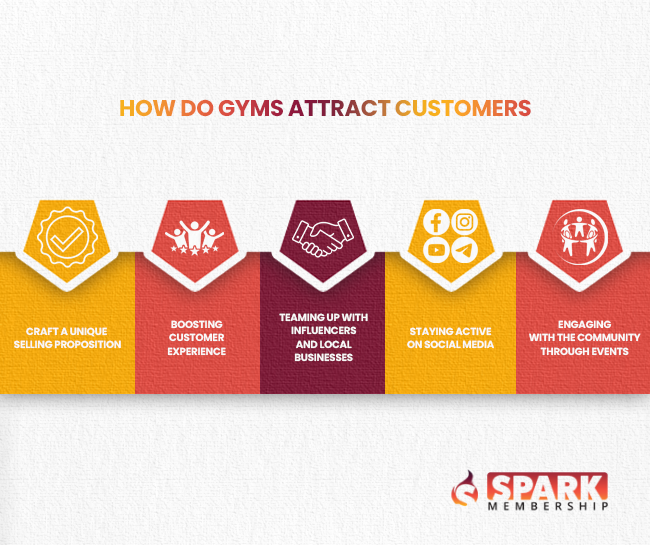
Getting new people through the door of a gym is a bit like mixing art and science. It’s all about really understanding what people want and how they behave. So, let’s look at how the best gyms out there bring in lots of members:

  • Crafting a Unique Selling Proposition (USP): A USP makes your gym unique. It could be exclusive classes, top-tier equipment, or expert trainers. Highlighting these unique features makes your gym the preferred choice, attracting more members in a competitive market.
  • Boosting Customer Experience: Customer experience encompasses the overall feel of your gym. It’s vital to maintain cleanliness, offer diverse classes, and ensure staff friendliness. A positive atmosphere results in satisfied members, enhancing word-of-mouth referrals and member retention.
  • Teaming Up with Influencers and Local Businesses: Collaborating with influencers and local businesses raises your gym’s profile. Establish partnerships for promotions, events, or member discounts to increase visibility and attract a diverse clientele.
  • Staying Active on Social Media: An active online presence boosts your gym’s visibility. Post engaging content, interact with followers, and highlight special events or offers to stay top-of-mind and foster a sense of community.
  • Engaging with the Community through Events: Participating in local events fosters community engagement. Hosting fitness challenges or wellness workshops showcases your gym’s personality and values, enhancing your reputation and drawing in potential members.

💡By carefully blending these strategies, gyms can become a hotspot, attracting people who are looking for more than just a workout – they’re looking for a community to join.

How to Do Gym Promotion?

Promoting a gym effectively means leveraging various strategies to highlight what makes your facility unique, ultimately driving in traffic and building a community of loyal members. Here’s a dive into diverse promotion tactics that can significantly boost your gym’s profile:

Leverage Discounts and Special Offers:

Leverage Discounts and Special Offers

Offering discounts or special promotions, especially during sign-up seasons like New Year, can be a game-changer. Limited-time offers create a sense of urgency, encouraging potential members to act fast and sign up. Seasonal discounts, family packages, and student offers are also great ways to attract a wider audience and cater to different needs.

Implement Referral Programs:

Implement Referral Programs

Word-of-mouth is a powerful promotion tool. By implementing a robust referral program, you encourage your existing members to bring in friends, family, or colleagues. Offering rewards or discounts for every successful referral not only attracts new members but also strengthens the bond with your current clientele.

Host Community Events:

Host Community Events

Organizing and participating in local community events provide a platform for your gym to connect with potential customers. Fitness challenges, health workshops, and charity runs are excellent opportunities to showcase your gym’s values, engage with the local community, and foster a sense of camaraderie among participants.

Enhance Online Presence and Engagement:

Enhance Online Presence

In today’s digital age, having a strong online presence is indispensable. Utilize social media platforms to share engaging content, promote events, and interact with your audience. Regular posts, Instagram Live workout sessions, and user-generated content help in maintaining visibility and building a sense of community around your brand.

💡 Reach potential members where they are, showcasing your unique offerings and building a community that fuels both interest and loyalty. Elevate your gym’s visibility and connect with a broader audience, ensuring a steady influx of new members for sustainable business growth.

Use SEO Strategies:

Use SEO Strategies

A well-designed, user-friendly website is your gym’s digital storefront. Ensure it’s optimized for search engines (SEO) to increase visibility and attract organic traffic. Incorporate relevant keywords, create valuable content, and ensure mobile responsiveness to enhance user experience and convert website visitors into gym members.

Collaboration with local businesses and fitness influencers:

Collaboration with local businesses

Establish partnerships with local businesses and fitness influencers to expand your reach. Cross-promotions, joint events, or exclusive discounts for employees of local businesses can open up new avenues for attracting members and building a diverse clientele.

Encourage Reviews and Testimonials:

Encourage Reviews and Testimonials

Positive reviews and testimonials build credibility and trust. Encourage satisfied members to share their experiences online. Featuring these reviews on your website and social media platforms highlights the positive atmosphere and results achieved at your gym, convincing prospective members of the value you offer.

💡 Positive feedback showcases the value of your programs, fostering credibility and attracting new members eager to experience the benefits of your fitness offerings.

Personalize Communication:

Personalize Communication

Personalization is key in building relationships. Tailor your communication, offers, and services to meet the individual needs and preferences of your members. Personalized emails, targeted advertising, and customized fitness plans make members feel valued, increasing loyalty and positive word-of-mouth.

Implementing these promotion strategies, while remaining consistent and authentic in your approach, will significantly contribute to building a thriving gym community and driving business growth.

Attracting new gym members is a multifaceted endeavor. By implementing these practical and effective strategies, you can ensure that your fitness business not only attracts new faces but also fosters a community that keeps them coming back. Ready to pump up your gym’s membership? Time to get into action!

We invite you to explore one of our blogs, “How to Make Your Small Gym Stand Out in a Crowded Market,” offering insightful strategies for elevating your establishment.

Additionally, consider using Spark Membership Software for comprehensive gym management. Ensure seamless operations and unlock the full potential of your business.

Where Most Martial Arts Schools Struggle: Embracing Digital Era

Where Most Martial Arts Schools Struggl

I want to address something powerful within our industry. As passionate martial arts school owners, we experience the highs and lows of our business journey. Let’s delve into a critical aspect that needs our attention – our struggle with adapting to the modern era. While there are certainly positives in our industry, it’s crucial to acknowledge and tackle the challenges we face. One such challenge revolves around understanding and harnessing the power of the digital age.

The Pace of Change in the Modern Era

The Pace of Change in the Modern Era

In today’s fast-moving world, we, as martial artists, need to stay updated. Our world has changed a lot, especially after the pandemic. One big change is that technology is now a big part of our lives. Digital tools and platforms are more powerful than we might think.

Transitioning From Traditional to Digital

Transitioning From Traditional to Digital

Consider this scenario: I recently spent time at Isla Mirage, our beach house, over the weekend. While enjoying breakfast, I noticed a stack of brochures. I picked one up and started browsing through it. However, a sense of dissatisfaction crept in. The brochure, while beautifully designed, felt disconnected from my digital-centric mindset. In contrast, I’m accustomed to the digital experience, where a simple screen can showcase a property with multiple pictures, detailed descriptions, specifications, location insights, and historical significance. This shift, of course, includes platforms like Zillow.

The Need for Evolution in Martial Arts

The Need for Evolution in Martial Arts

This experience led me to a crucial realization: just like any other industry, martial arts must evolve. As martial arts school owners, we need to adapt to the digital age. Take, for instance, the new student manual. Upon reviewing it, I found that it hadn’t been updated in quite a while. Imagine if this manual were digitally accessible, allowing new students to easily access it on their phones. Not only does this improve convenience, but it also grants us, as school owners, the ability to continually update and enhance the content, graphics, and information. This flexibility is essential for growth and relevance in today’s world.

Embracing Change for School Growth

Embracing Change for School Growth

To put it simply, we need to evaluate our approach and transition into the digital era. Our strength lies in our ability to adapt and mold our martial arts schools according to the changing times. It’s not just about embracing technology for the sake of it – it’s about recognizing the immense potential it offers for our growth.

The Essence of Growth

The Essence of Growth

I urge you to reflect on the role of technology in your martial arts school. It’s not a matter of if, but when, you’ll need to incorporate digital elements into your operations. The ability to evolve, adapt, and thrive in the digital era is paramount for the growth of our schools. 

Explore the game-changing insights of “4 Features For Every Gym POS You’ll Ever Need.” 📲 Uncover the path to digital transformation, tailored for martial arts schools like yours.

Supercharge Your Martial Arts School with Spark Membership Software! 🥋

Ready to streamline operations and boost growth? Simplify tasks, engage students, and watch your studio thrive.

How to Run Your First Successful Martial Arts Facebook Ads: A Step-by-Step Guide

How to Run Your First Successful Martial Arts Facebook Ads

In the digital age, successfully running a martial arts school requires more than just excellent instruction – it requires a strong online presence. Facebook ads can be a powerful tool in your arsenal, helping you reach a larger audience and grow your student base.

Understanding Facebook Ads Basics

Understanding Facebook Ads Basics

Facebook ads are targeted messages that appear in the feeds of specific groups of people, based on demographics, interests, and behavior. They’re especially beneficial for martial arts schools as they allow you to reach potential students in your area who have shown interest in martial arts or fitness.

Step-by-Step Guide to Your First Facebook Ad

Setting Up Your Facebook Ads Account

Setting Up Your Facebook Ads Account

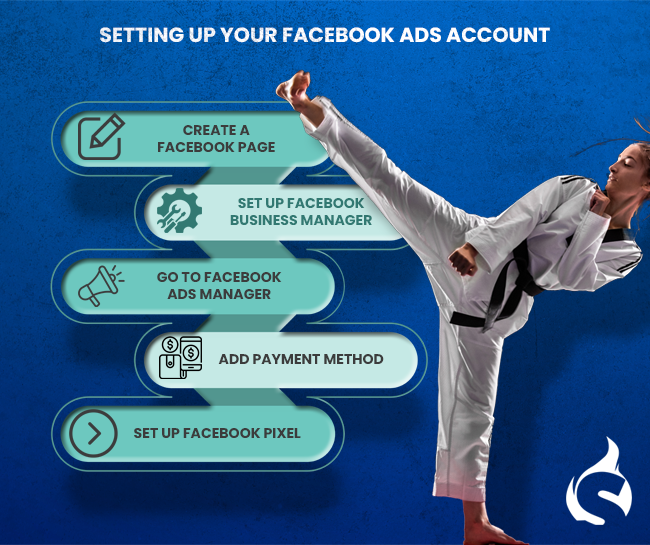
Setting up your Facebook Ads account is a pivotal first step towards promoting your martial arts school effectively. This process might seem daunting initially, but by following these simple steps, you’ll be well on your way to launching your first ad campaign:

  • Create a Facebook Business Page: You’ll need a business page to run ads. To create one, go to your personal Facebook profile, click on “Pages” from the left menu, then “Create New Page.”
  • Go to Facebook Ads Manager: Inside Business Manager, click the nine-dot grid icon on the top left of the screen, select “Ads Manager.”
  • Create a New Ad Account: In Ads Manager, click the hamburger icon (three horizontal lines) in the top left corner, select “Account Settings,” then “Add New Ad Account.” Fill in the required details.
  • Add Payment Method: Navigate to “Billing” in “Settings.” Click “Payment Settings” and then “Add Payment Method.” Follow the prompts to add your payment information.
  • Set Up Facebook Pixel: In the main menu, go to “Events Manager,” click “Connect a Data Source,” choose “Web,” then “Facebook Pixel.” Follow the instructions to add the Pixel to your website.

💡 Once you’ve completed these steps, you’re ready to start creating your first Facebook Ad. Remember, practice makes perfect when it comes to mastering Facebook Ads

Defining Your Target Audience

Defining Your Target Audience

Facebook allows you to be specific about who you want to see your ads. Consider targeting individuals who have shown interest in martial arts, parents of children who might be interested in your classes, or people located near your martial arts school.

Creating Your Ad Content: A Checklist

Creating Your Ad Content: A Checklist

Creating compelling content for your Facebook Ad is a crucial aspect of your campaign’s success. Follow this checklist to ensure you craft an ad that connects with your audience and prompts action:

  • Objective Identified: Define what you want your ad to accomplish (e.g., brand awareness, website traffic, class sign-ups).
  • Ad Format Selected: Choose from options like single image, video, carousel, depending on your message and goal.
  • High-Quality Visuals Chosen: Select clear, high-quality images or videos that represent your martial arts school and its offerings.
  • Compelling Headline Written: Develop a catchy and clear headline that articulates your offering succinctly.
  • Engaging Ad Text Created: Write an engaging and informative narrative about your martial arts school, addressing your audience’s needs and interests.
  • Call-to-Action (CTA) Included: Decide on and include a direct prompt indicating the action users should take next (e.g., “Sign Up,” “Contact Us,” “Learn More”).
  • Ad Previewed: Preview your ad to ensure it appears as expected before finalizing and publishing.

💡 Remember to continually experiment with and refine your content based on feedback and results for maximum effectiveness.

Setting Your Budget

Setting Your Budget

Your budget is the total amount you’re willing to spend on a particular Facebook ad campaign. Facebook provides two budgeting options: daily and lifetime.

  • Daily Budget: This is the average amount you’re willing to spend on a specific ad set or campaign each day. Your actual spending might vary slightly, but it won’t exceed the daily average over the course of a week.
  • Lifetime Budget: This is the amount you’re willing to spend over the entire duration of your ad set or campaign. Facebook will optimize your budget, spending it evenly over the duration of your campaign.

💡When deciding on a budget, start small if you’re new to Facebook ads. This allows you to test and learn what works best for your martial arts school without spending a large amount of money.

Setting Your Schedule

Setting Your Schedule

Your ad schedule determines when your ad will run. Facebook offers two options: run ads all the time or run ads on a schedule.

  • Run Ads All the Time: Your ads will run continuously until your budget is spent or your campaign end date is reached.
  • Run Ads on a Schedule: You can choose specific hours and days of the week to run your ads. This is only available if you choose the lifetime budget option.

💡When scheduling your ads, consider your target audience’s habits. For instance, if your target demographic is working adults, running your ads in the evenings or on weekends might be more effective.

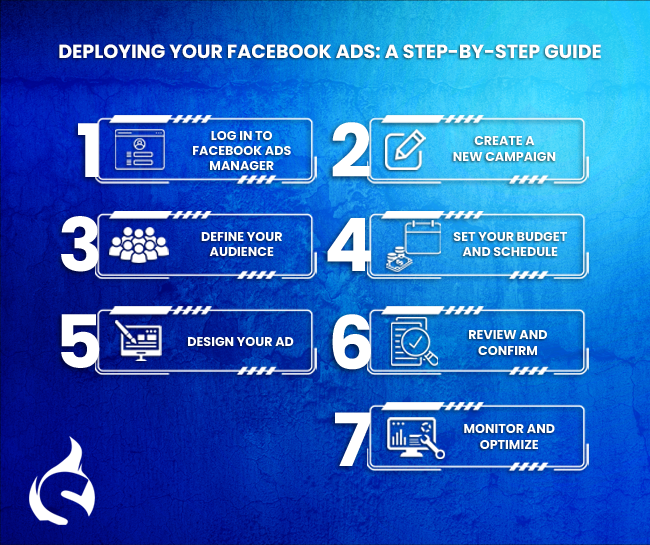
Deploying Your Facebook Ads: A Step-by-Step Guide

Deploying Your Facebook Ads: A Step-by-Step Guide

  1. Log In to Facebook Ads Manager:

Start by logging into your Facebook Ads Manager account.

  1. Create a New Campaign:

Click the “Create” button. You’ll be prompted to select an advertising objective. Choose the one that aligns with your goal for this campaign.

  1. Define Your Audience:

After choosing your objective, you’ll move on to defining your target audience. You can select demographic details such as age, gender, location, interests, and behaviors that align with your ideal martial arts students.

  1. Set Your Budget and Schedule:

Decide how much you want to spend on this campaign and when you want your ads to appear. You can opt for a daily budget or a lifetime budget, and you can schedule your ads to run continuously or during specific dates and times.

  1. Design Your Ad:

Now it’s time to create the ad itself. You can choose the ad format (image, video, carousel, etc.), upload your media, write your ad copy, and define your call-to-action (CTA).

  1. Review and Confirm:

Take a moment to review your settings and ad design. Make sure everything aligns with your objectives and meets Facebook’s ad policies. Once you’re satisfied, click the “Confirm” button.

  1. Monitor and Optimize:

After your ad is live, monitor its performance in the Ads Manager dashboard. This will help you understand how your ad is performing and identify any areas for improvement.

💡 Remember, success with Facebook Ads doesn’t happen overnight. It requires patience, experimentation, and constant optimization. But with this guide, you’re well-equipped to launch your first ad campaign and bring more students to your martial arts school.

Best Practices for Martial Arts Facebook Ads

Best Practices for Martial Arts Facebook Ads

To ensure your Facebook Ads effectively promote your martial arts school, it’s essential to follow a set of proven practices. Here are some key strategies to enhance the success of your ad campaigns:

  • Identify Your Target Audience: Know who you want to reach with your ads. Consider age, location, and interests related to martial arts.
  • Use High-Quality Visuals: Images or videos should be clear, captivating, and related to martial arts to effectively draw attention to your ad.
  • Write Engaging Copy: Your ad’s text should resonate with your audience and clearly convey the benefits of your martial arts school.
  • Implement a Strong Call-to-Action (CTA): Direct your audience on what to do next, like ‘Sign Up for a Free Trial’, ‘Book a Class Now’, or ‘Contact Us Today’.
  • Optimize for Mobile: Make sure your ads look great on mobile devices as most users access Facebook on their phones.
  • Test Different Ad Elements: Try varying images, headlines, ad text, and CTAs to see what performs best with your audience.
  • Monitor and Adjust Your Ads Regularly: Regularly review the performance of your ads. If something’s not working, don’t be afraid to adjust your approach.

💡 Remember, the best practices are only guidelines. The most important thing is to understand your specific audience and what they respond to. Continually learning and adapting your strategy is the key to successful Facebook advertising.

Taking the first step into Facebook advertising for your martial arts school might feel like a big leap, but it’s a decision that could take your business to new heights. Remember, success doesn’t come overnight. It requires continuous learning, experimenting, and refining. But with patience and persistence, you’ll be on your way to attracting more students and growing your martial arts school.

Discover the untapped potential of Facebook Ads for promoting your martial arts school. Unlock a world of growth and engagement. Dive into our blog, ‘Harness the Power of Facebook Ads for Martial Arts School Promotion,’ and supercharge your marketing strategy today. Plus, maximize your school’s potential with Spark Membership Software, the ultimate tool for managing and expanding your martial arts community. Don’t miss out on the power of digital success.

How to Cancel Gym Insights Software

How to Cancel Gym Insights Software

For some fitness business owners, there might be various reasons why they’d want to cancel their subscription with Gym Insights. This might be due to shifting needs, evolving circumstances, or a desire for a better fit. Whatever the case, we’re here to help you through the process. Let’s walk through the simple steps to cancel your Gym Insights subscription 

Step-by-step Guide to Cancel Gym Insight Software

Cancelling your Gym Insight Software subscription involves a few steps:

  1. Login to your account:

Login to your account

Start by logging into your Gym Insight Software account with your username and password.

  1. Navigate to account settings:

Look for the ‘Account Settings’ or ‘Subscription Settings’ option, usually found in the dropdown menu under your account name.

  1. Select cancel subscription:

Here you should find the option to cancel your subscription. It might be a button or a link.

  1. Confirm cancellation:

You may be asked to confirm the cancellation. Be aware that you might also be asked to provide a reason for the cancellation.

  1. Receive confirmation:

Upon successful cancellation, you should receive a confirmation email.

💡 Remember to cancel before your next billing cycle to avoid additional charges. If you encounter any difficulties, consider reaching out to Gym Insight’s customer support.

FAQ’s

What happens to my data after cancelling GymInsights Software?

Upon cancellation of GymInsights, you have a 30-day window to back up your data. This means you’ll need to save any important information you wish to retain elsewhere before the effective date of plan cancellation. After this 30-day period, all data associated with your account will be permanently deleted.

Can I get a refund if I cancel GymInsights Software midway through the billing cycle?

Yes, GymInsights provides a refund under certain conditions. You have thirty (30) days from the effective date of the plan to determine if the service meets your needs. If within this period, you decide that it doesn’t, you must notify GymInsights in writing that you wish to cancel the service and receive a refund. Once they receive this request, a confirmation will be sent to you.

For clients on a subscription plan, GymInsights will refund the fee paid for the corresponding month in which the request was received, excluding any setup fees paid. For prepaid plan clients, a full refund minus any setup fees paid, if applicable, will be issued.

Can I reactivate my GymInsights Software account?

Absolutely! If you wish to reactivate your GymInsights account, you may do so by contacting them directly at info@gyminsight.com.

How long does it take to cancel GymInsights Software?

The cancellation process for GymInsights software takes 30 days after your cancellation request has been confirmed. This means you’ll still have access to your account for an additional 30 days following your decision to cancel, giving you ample time to back up any necessary data

Why Sparkmembership

Why Sparkmembership

Switching software can feel daunting, but with Sparkmembership, it doesn’t have to be. Our software is tailored to meet your fitness business needs, whether you run a gym, a yoga studio, or a martial arts school.

We’ve outlined some of the key features that make Sparkmembership stand out:

  • Seamless scheduling: With our intuitive interface, scheduling classes and managing trainers has never been easier.
  • Efficient billing: Automated and secure payment processing takes the hassle out of billing.
  • Customized member experience: Create a personalized journey for each member from their first sign-up to their ongoing engagement.
  • Integrated analytics: Make smarter business decisions with real-time data and insights at your fingertips.

But don’t just take our word for it, see it for yourself. We invite you to book a live demo of Sparkmembership. Experience first-hand how our software can simplify your fitness business management and help your business thrive.

In the end, the goal is to offer a solution that supports your growth and your members’ journey. With Sparkmembership, you’re not just choosing a software – you’re choosing a partner committed to your success. We hope to see you soon in our live demo and can’t wait to help you spark your fitness business to new heights.